Console players rarely think about networking architecture the way PC players sometimes do, and for good reason — consoles are built to just work. But “just working” doesn’t mean identical, and the default networking setup across PS5, Xbox Series X, and Switch differs in ways that quietly shape how competitive online play actually feels on each platform.
The Baseline Both Major Consoles Get Right
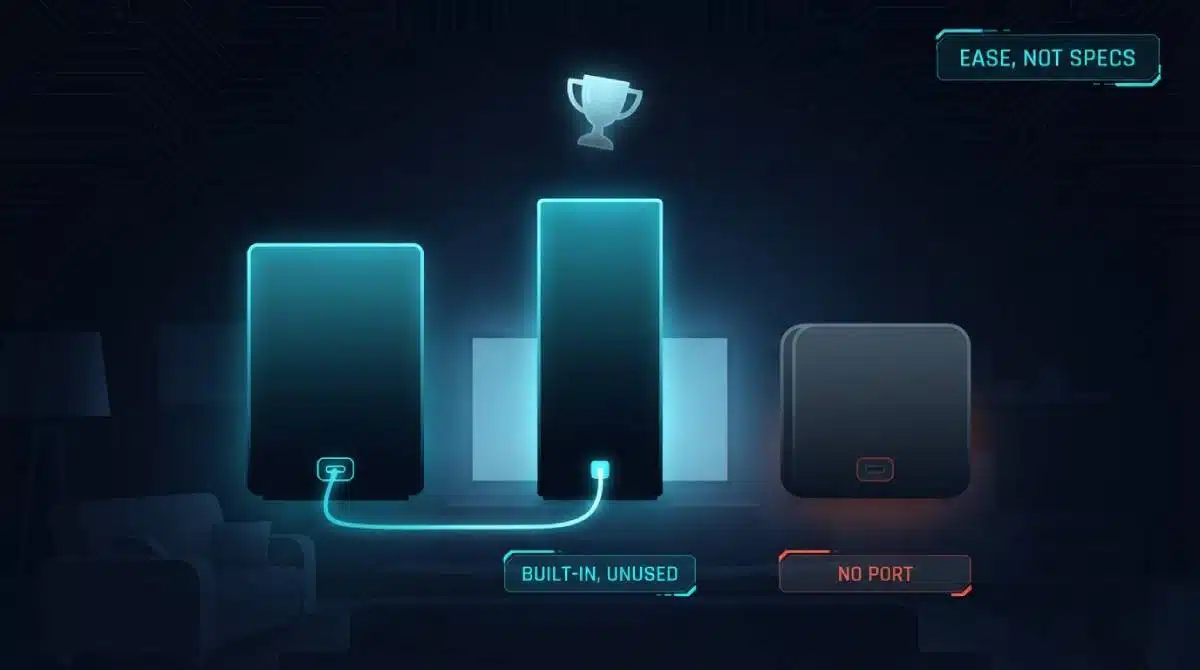
Both PS5 and Xbox Series X ship with built-in Gigabit Ethernet ports and modern WiFi 6 support, giving players a genuine choice rather than forcing wireless-only play. The real differentiator isn’t the hardware capability — both platforms are comparably equipped — it’s the default experience during setup, which nudges the overwhelming majority of players toward WiFi simply because it’s the path of least resistance during initial console setup, with no prompt suggesting Ethernet would meaningfully improve competitive play.
Where Switch Genuinely Stood Apart
The original Nintendo Switch was WiFi-only, full stop — no built-in Ethernet port at all, a real structural limitation compared to its console competitors for anyone playing latency-sensitive online games. This wasn’t a minor inconvenience for competitive Switch players; without a third-party USB-to-Ethernet adapter, wired play simply wasn’t an option, unlike on PS5 or Xbox where it’s built in from the box. Switch 2’s dock adds genuine Ethernet support, closing a gap that had separated Nintendo’s hardware from its competitors for the console’s entire original generation.
Why “Winning” This Comparison Isn’t About Raw Hardware
None of this determines which console is objectively “better” for online play in some absolute sense — what it determines is how much effort each platform requires from you personally to get a genuinely good connection. PS5 and Xbox give you the tools by default and simply don’t prompt you to use them; Switch’s original hardware required extra purchased equipment to reach parity at all; Switch 2 closes that gap. The platform that actually “wins” isn’t necessarily the one with the best specs — it’s the one where the good option is easiest to actually reach and use, and on that specific measure, none of the three has been perfect.
Whichever platform you’re on, the fix is the same: use the wired option if it’s available to you, and verify the improvement rather than assuming it. Run our Gamer Speed Test on WiFi, then again on Ethernet, and compare your actual ping and jitter side by side.
Related Guides
- Gamer Hub — All Game Ping Tests
- Gamer Speed Test
- Warzone Ping Test
- Apex Legends Ping Test
- Cable vs Fiber for Gaming
Frequently Asked Questions
Do PS5 and Xbox Series X have the same networking hardware?
They’re broadly comparable — both include built-in Gigabit Ethernet ports and WiFi 6 support. The bigger difference between platforms isn’t the hardware itself, but whether setup and defaults actually guide players toward the better wired option.
Does the original Nintendo Switch support wired Ethernet?
Not natively — the original Switch has no built-in Ethernet port and requires a third-party USB-to-Ethernet adapter for wired play. Switch 2’s dock adds genuine built-in Ethernet support, closing that gap.