“Check your ping” is common advice in gaming and tech circles, tossed around so casually that a lot of people who use the term regularly have never actually had it explained simply. The underlying concept is genuinely straightforward once it’s separated from the jargon around it.
A Round Trip, Timed
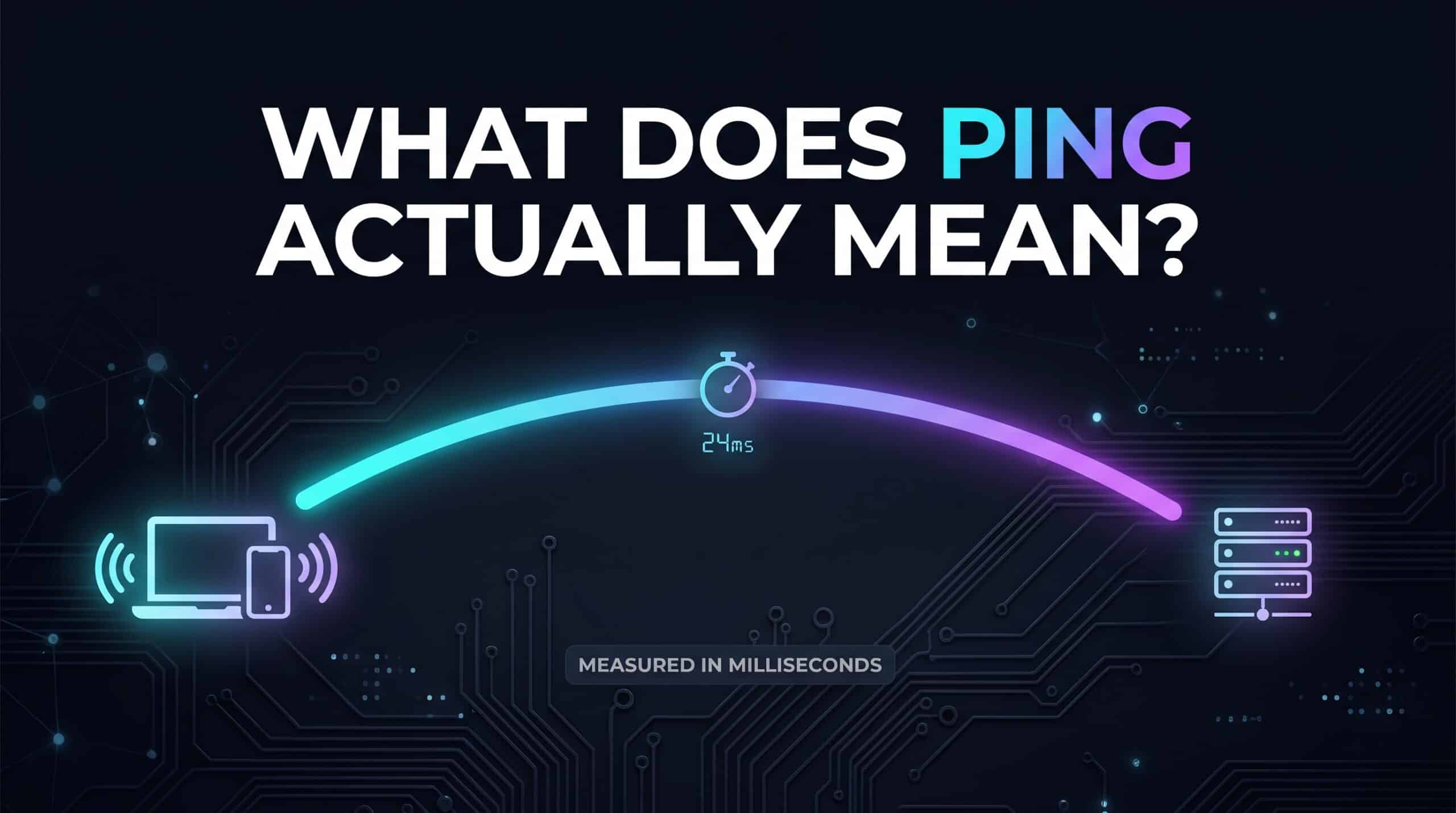
Ping is the time it takes for a small piece of data to travel from your device to a server and back again — a round trip, measured in milliseconds. Lower numbers mean a shorter round trip; higher numbers mean a longer one. That’s the entire core concept: how long a message takes to go somewhere and receive a reply, timed precisely.
Where the Name Actually Comes From
The term borrows from sonar terminology — a “ping” sent out and the time it takes to receive an echo back, used to measure distance underwater. The networking usage adopted the same word for essentially the same concept: send something out, time how long the reply takes to return, and use that duration to understand something about the distance or quality of the path in between.
Why It Matters More in Some Situations Than Others
Ping matters most in situations where timing is genuinely critical — competitive gaming, video calls, anything happening in real time where a delay is immediately noticeable. It matters far less for activities like downloading a file or loading a static webpage, where total speed and consistency matter more than the specific round-trip time of any individual request.
What a “Good” Number Actually Looks Like
Ping under 20 milliseconds is considered excellent for latency-sensitive use, under 50ms is generally solid, and above 100ms starts becoming noticeable for real-time activities like competitive gaming or video calls, though it remains perfectly fine for everyday browsing and streaming.
Check your own current ping, alongside your download and upload speed, with our free speed test.
Related Guides
Frequently Asked Questions
What does ping actually measure, in simple terms?
Ping measures how long it takes for a small piece of data to travel from your device to a server and back again, measured in milliseconds. Lower numbers mean a shorter round trip and a more responsive connection for real-time activities.
What’s considered a good ping?
Under 20 milliseconds is excellent for latency-sensitive use, under 50ms is generally solid, and above 100ms starts becoming noticeable for real-time activities like gaming or video calls, though it’s still fine for everyday browsing and streaming.