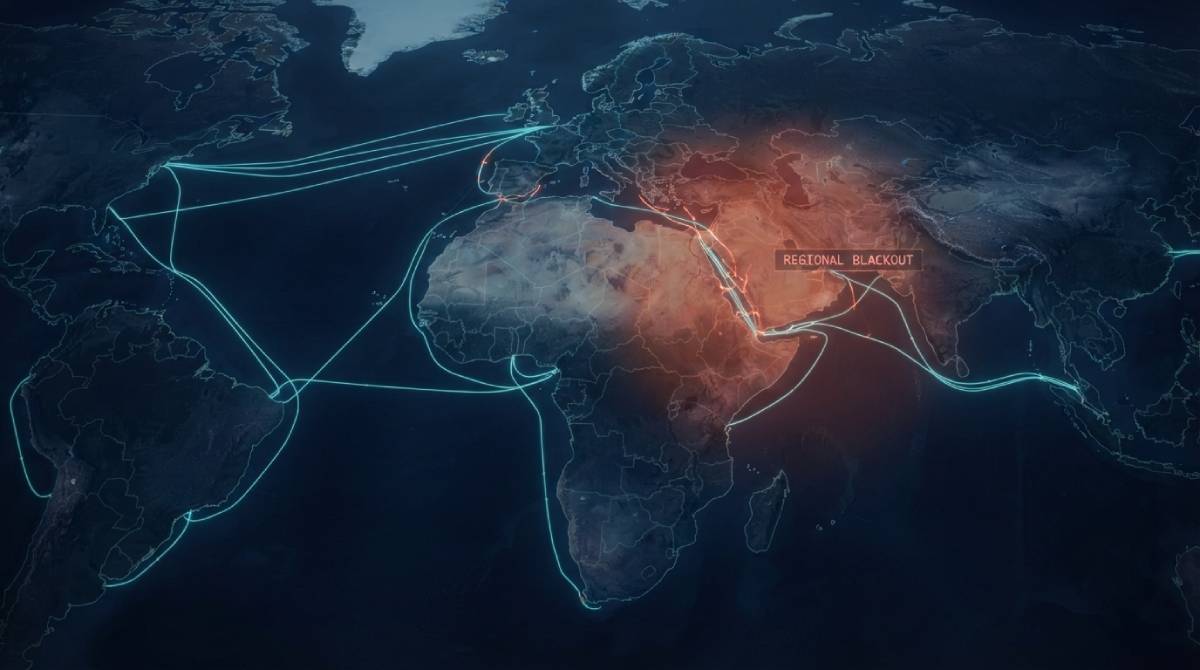
In late January and early February 2008, a series of undersea cable cuts happened within days of each other in the Mediterranean and surrounding waters, and the combined effect disrupted internet connectivity across a huge swath of the Middle East and South Asia simultaneously — one of the most widely felt internet disruptions in the medium’s history, and a genuine case study in how concentrated the internet’s physical infrastructure actually is.
Multiple Cuts, One Devastating Overlap
Individually, a single cable cut is a manageable event — traffic reroutes through remaining cables, and the impact stays relatively contained. What made this particular event so severe was the overlapping timing: several separate cables serving the same general region were damaged within a short window, meaning the redundancy that normally absorbs a single fault simply wasn’t available. Countries including India, Pakistan, and Egypt all experienced significant internet slowdowns and outages as a direct result.
Why This Exposed a Real Structural Weakness
The event became a widely cited example in networking and infrastructure circles specifically because it demonstrated something theoretical made suddenly, concretely real: entire countries’ international connectivity can depend on a surprisingly small number of physical cable routes, and when enough of those routes fail simultaneously, no amount of software-level rerouting can fully compensate for a genuine lack of remaining physical capacity.
What’s Changed Since
Cable operators and countries affected by this event have since invested in additional route diversity specifically to reduce this kind of concentrated risk — more cables, more varied paths, less dependence on any single narrow corridor. The event remains a useful reminder that the internet, for all its abstraction in daily use, ultimately runs through physical infrastructure with real, physical vulnerabilities, and building genuine redundancy against that is an ongoing, deliberate engineering effort, not something that happens automatically.
Whatever the state of the infrastructure between you and wherever you’re connecting, you can always check your own current connection quality with our free speed test.
Related Guides
Frequently Asked Questions
What happened during the 2008 cable cut event?
A series of undersea cable cuts occurred within days of each other in early 2008, and the overlapping timing meant the normal redundancy that absorbs a single cable fault wasn’t available, disrupting internet connectivity across the Middle East and South Asia simultaneously.
Could something like this happen again today?
The underlying vulnerability — a limited number of physical cable routes serving certain regions — still exists in various forms, though cable operators have invested in additional route diversity since this event specifically to reduce this kind of concentrated risk.