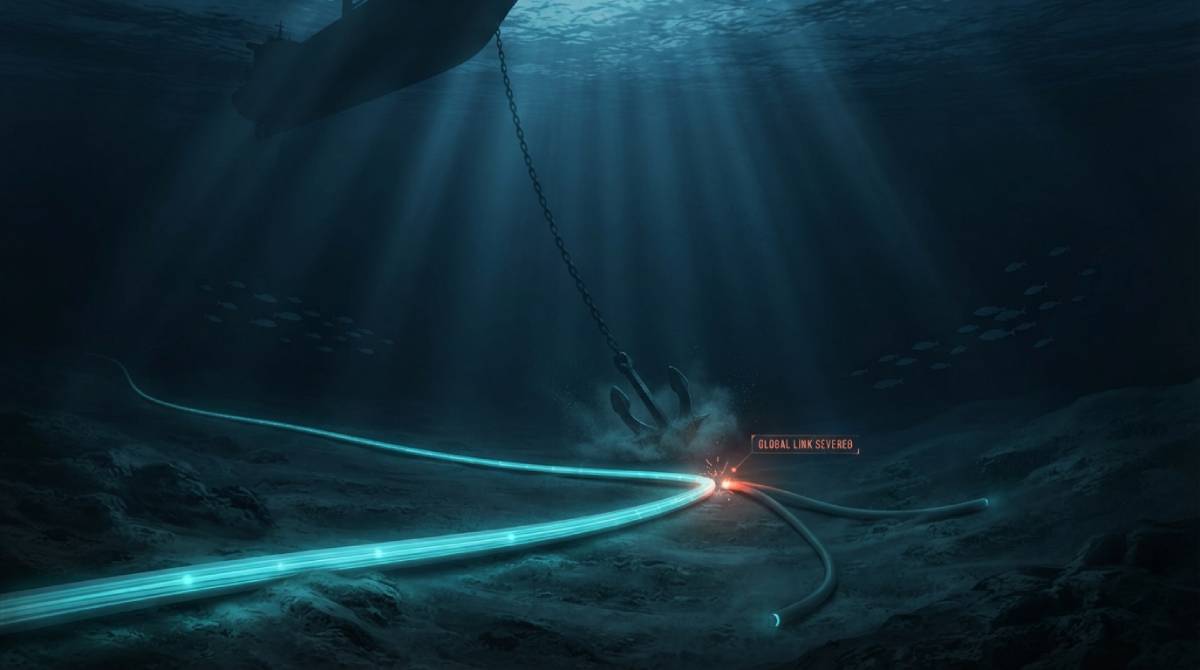
Almost all international internet traffic — the connection between continents, not just within them — travels through undersea fiber optic cables resting on the ocean floor. These cables are the actual physical backbone of the global internet, and they break far more frequently than most people realize, usually for reasons far less dramatic than a natural disaster.
The Anchor That Cut Off a Region
In 2008, a ship’s anchor cut through not one but two undersea cables off the coast of Egypt, disrupting internet connectivity across a significant portion of the Middle East and South Asia and forcing traffic to reroute along alternate paths. It wasn’t sabotage, and it wasn’t a storm — it was an ordinary anchor, dragged in the wrong place, severing infrastructure that millions of people depended on without anyone involved realizing the scale of what had happened until connectivity started failing across multiple countries.
Why This Keeps Happening Around the World
Fishing trawlers dragging nets, ship anchors, and even natural seafloor movement all pose genuine, ongoing risk to undersea cables, which is why cable operators maintain dedicated repair ships on standby in various regions specifically to respond when a break is detected. Shark bites, once a popular explanation, actually account for a very small fraction of documented cable faults — the far more common causes are simply human maritime activity happening in the wrong place at the wrong time.
Why a Handful of Cables Carry So Much Risk
A relatively small number of these undersea cables carry an enormous share of total intercontinental internet traffic, which means a single cable fault in the wrong location can meaningfully degrade connectivity across an entire region until traffic reroutes or repairs are completed — sometimes taking days or weeks depending on the cable’s depth and the complexity of the damage. It’s a genuinely fragile-sounding system for something the entire world depends on, held together by redundancy and a fleet of specialized repair ships rather than any single point being unbreakable.
If your own connection has felt unusually slow to certain international sites or services recently, check your current speed with our free speed test — a distant cable issue can sometimes be part of the explanation.
Related Guides
Frequently Asked Questions
What actually causes most undersea cable breaks?
Human maritime activity — ship anchors and fishing trawlers dragging nets — accounts for the large majority of documented undersea cable faults, far more than shark bites or natural disasters, which are comparatively rare causes.
Can a single cable break really affect internet for an entire region?
Yes. A relatively small number of undersea cables carry a large share of total intercontinental internet traffic, so a fault in the wrong location can meaningfully degrade connectivity across an entire region until traffic reroutes or repairs are completed.