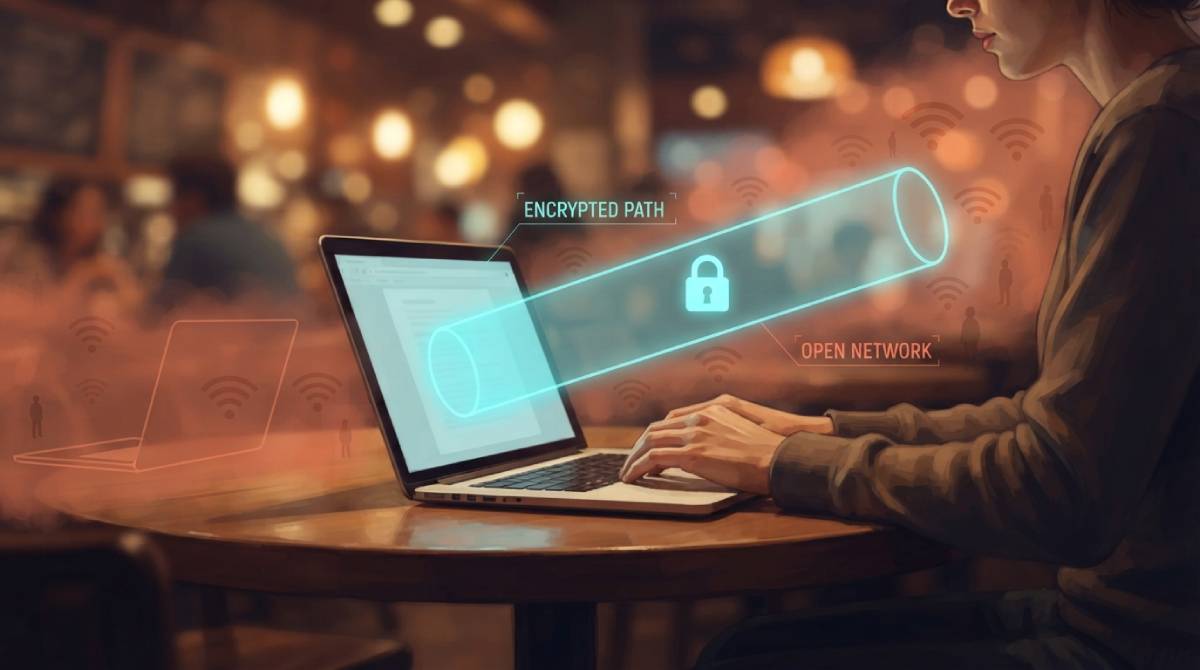
“It’s fine, the site has HTTPS” is one of the most common pieces of reassurance people give themselves before doing something sensitive on public WiFi at a coffee shop or airport. HTTPS is genuinely valuable — but it protects less of the picture than most people assume, and the gap it leaves open is exactly where public WiFi risk actually lives.
What HTTPS Actually Encrypts
HTTPS encrypts the connection between your browser and the specific website’s server — the data traveling back and forth once that connection is established. That’s a real and important layer of protection, and it’s why HTTPS is genuinely worth checking for before entering sensitive information anywhere. But it’s a narrower guarantee than “I’m safe on this network,” because it only covers that one encrypted tunnel, not everything else happening around it on a shared public connection.
Where the Real Risk Actually Lives
Public WiFi networks remain vulnerable to attacks that HTTPS doesn’t address at all. A malicious actor can set up a fake hotspot with a name designed to look legitimate — mimicking a coffee shop’s real network name closely enough that most people connect without a second thought — and once you’re on their network, they can attempt man-in-the-middle attacks or use packet-sniffing tools to observe traffic patterns, even if the content of your HTTPS-protected sessions themselves stays encrypted. The network layer and the encryption layer are separate problems, and HTTPS only solves one of them.
What Actually Closes the Gap
If you’re doing anything genuinely sensitive on public WiFi — banking, entering payment details, accessing work systems — a VPN adds a meaningful layer of protection HTTPS alone doesn’t provide, encrypting your traffic at the network level rather than just the individual website level. For casual browsing, HTTPS remains a reasonable baseline. For anything you’d be upset to have exposed, treat public WiFi as inherently less trustworthy than your home network, regardless of how many sites you visit show a padlock icon.
Whatever network you’re on, check your actual connection quality with our free speed test before relying on it for anything time-sensitive.
Related Guides
- Does a VPN Slow Down Internet Speed?
- How to Set Up a Guest WiFi Network
- What Is a Good Internet Speed?
Frequently Asked Questions
Does HTTPS make public WiFi completely safe?
No. HTTPS encrypts the connection between your browser and a specific website, which is genuinely valuable, but it doesn’t protect against network-level risks on public WiFi, like fake hotspots designed to mimic a legitimate network’s name.
Should I use a VPN on public WiFi even for HTTPS sites?
For anything sensitive — banking, payment details, work systems — yes, a VPN adds meaningful protection at the network level that HTTPS alone doesn’t cover. For casual browsing, HTTPS is a reasonable baseline on its own.