Rural internet access operates under a different set of constraints than urban or suburban areas, and understanding those constraints helps set realistic expectations rather than comparing rural speeds directly against big-city fiber marketing.
Why Rural Options Are Genuinely Different
Fiber and cable infrastructure is expensive to run to sparsely populated areas, which is why rural households more commonly rely on fixed wireless, satellite, or DSL rather than the fiber and cable options common in cities. Each of these technologies has real tradeoffs — fixed wireless and satellite in particular tend to carry higher latency than wired alternatives, even when download speeds look comparable on paper.
What Counts as a Genuinely Good Speed in a Rural Context
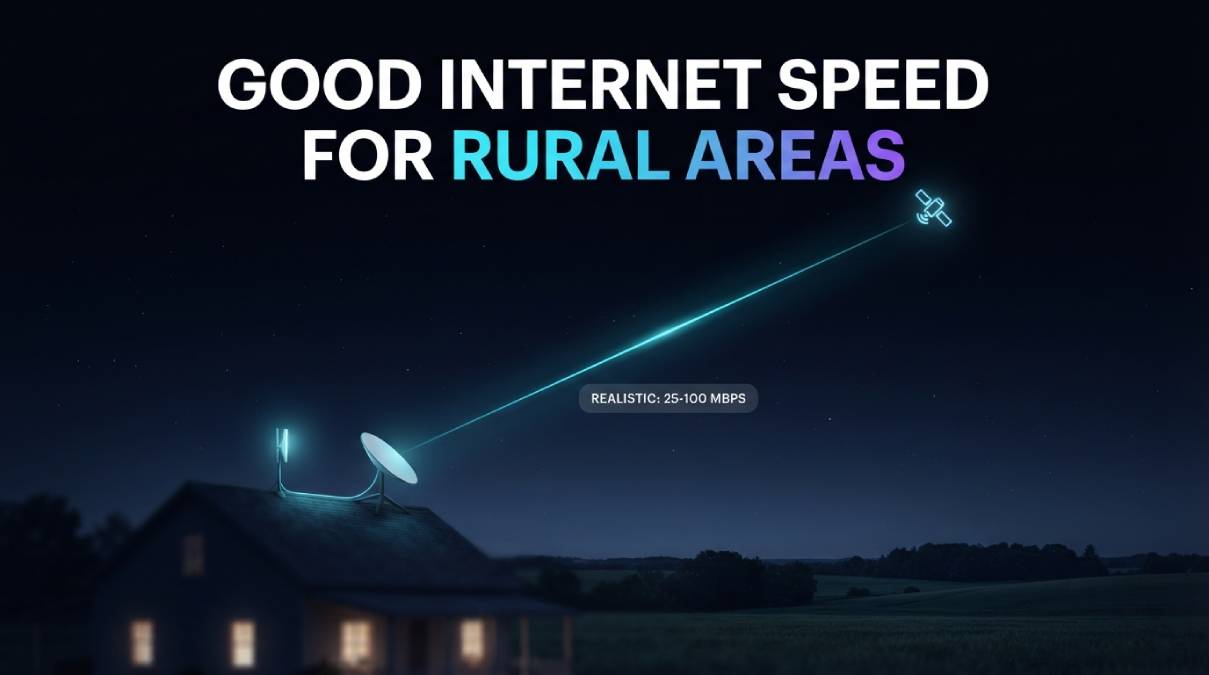
For a rural household, 25 to 100 Mbps download is generally considered solid, meaningfully lower than urban gigabit marketing but sufficient for typical streaming, video calls, and browsing for a small household. Satellite internet services, including newer low-orbit options, have improved this picture significantly in areas with no other viable option, though latency typically remains higher than fiber or cable even when speed is comparable.
Making the Most of Rural Internet
Scheduling large downloads and updates during off-peak hours matters more in rural areas, where available infrastructure capacity is often more limited than in dense urban networks. Wired connections within the home also matter more here, since a weaker overall connection has less margin to absorb the additional inefficiency that WiFi introduces on top of it.
Check your actual rural connection speed and latency with our free speed test.
Related Guides
Frequently Asked Questions
What internet speed is realistic in a rural area?
25 to 100 Mbps download is generally considered solid for a rural household, lower than urban fiber marketing but sufficient for typical streaming, calls, and browsing.
Why does rural internet often have higher latency even at similar speeds?
Fixed wireless and satellite technologies, more common in rural areas, inherently carry higher latency than fiber or cable, even when the download speed number itself looks comparable.