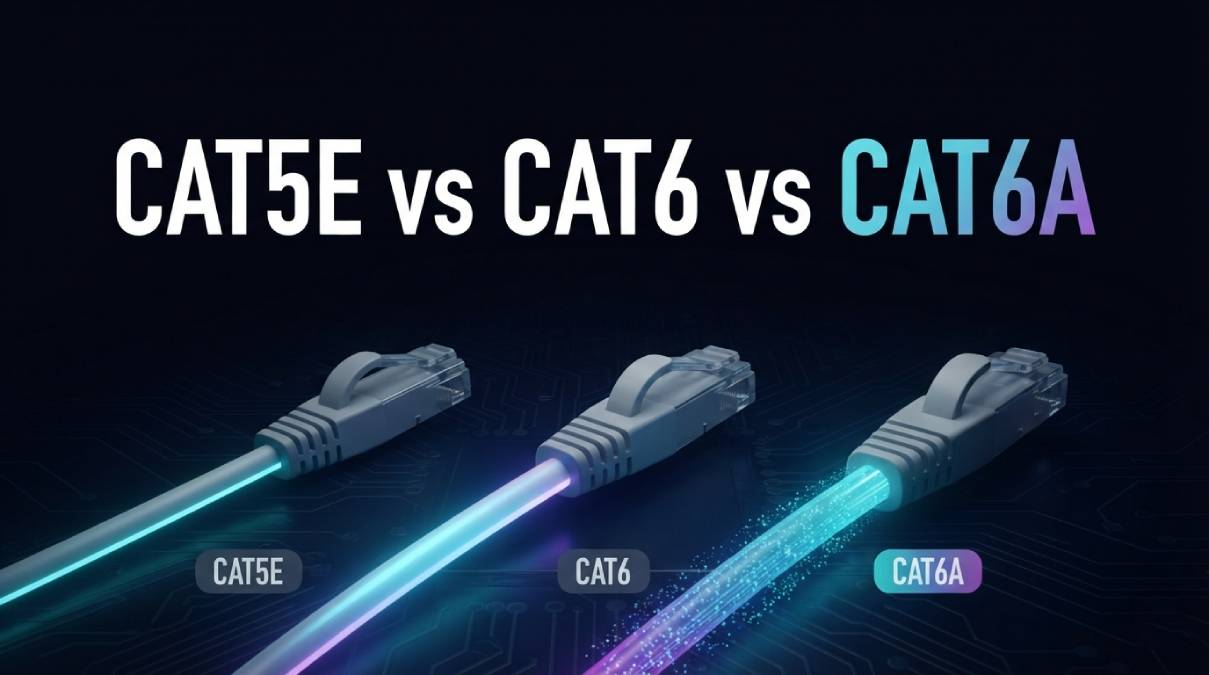
Ethernet cable categories are one of the most overthought purchases in home networking. For most households, the difference between Cat5e, Cat6, and Cat6a comes down to two numbers: maximum speed and maximum distance before that speed starts degrading.
What Each Category Actually Supports
Cat5e supports up to 1 Gigabit per second at distances up to 100 meters, which is genuinely enough for the vast majority of home internet plans, since even gigabit internet tops out at 1000 Mbps. Cat6 supports up to 10 Gigabit per second, but only at shorter distances (typically under 55 meters) before it drops back to 1 Gigabit performance. Cat6a extends that same 10 Gigabit capability out to the full 100 meters, with better shielding against interference as well.
Why Most Homes Do Not Need to Upgrade Past Cat5e
Unless your internet plan itself exceeds 1 Gigabit, or you are setting up a local network specifically for very fast file transfers between devices (like a home server or NAS), Cat5e cable already supports your full internet speed with room to spare. Upgrading to Cat6 or Cat6a for a standard gigabit-or-under internet plan provides no measurable real-world speed improvement, since the bottleneck is your internet plan, not the cable.
When Cat6 or Cat6a Genuinely Helps
If you have a multi-gigabit internet plan, or you regularly transfer very large files between devices on your local network at speeds faster than standard internet, Cat6 or Cat6a becomes genuinely worth the extra cost. For everyone else, the extra investment is unlikely to produce any noticeable difference in day-to-day use.
Whatever cable you are using, confirm your actual wired speed with our free speed test.
Related Guides
- Wired vs Wireless Internet Speed
- How to Fix a Slow Ethernet Connection
- Does an Ethernet Splitter Reduce Speed?
Frequently Asked Questions
Do I need Cat6 cable for gigabit internet?
No — Cat5e already supports gigabit speeds at standard home distances. Cat6 becomes relevant only if your plan exceeds 1 Gigabit per second.
Is Cat6a worth the extra cost for a typical home?
For most households on standard internet plans, no meaningful real-world difference will be noticeable. Cat6a is worth it specifically for multi-gigabit plans or heavy local file transfer needs.