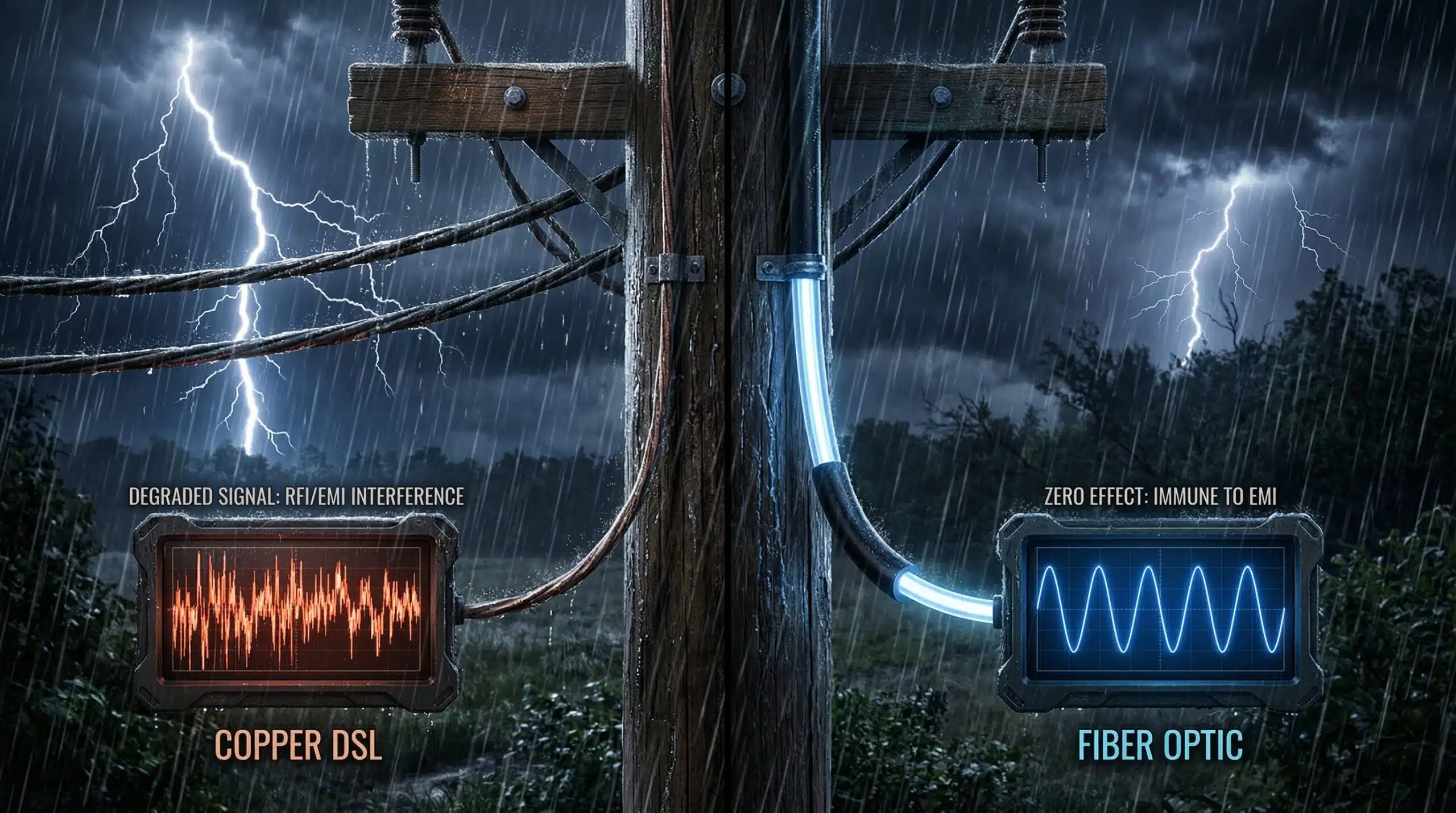
Does Weather Affect Internet Speed? Rain, Wind, and Heat Explained
Weather affects internet speed differently by connection type. Fiber is essentially immune; DSL is most vulnerable; satellite and fixed wireless fall in the middle. Test your speed during different weather conditions at instantspeedtest.net/ to see how your connection responds.
Weather Impact by Connection Type
| Weather Condition | Fiber | Cable | DSL | Satellite |
|---|---|---|---|---|
| Light rain | No effect | Minimal | Moderate | Moderate (rain fade) |
| Heavy rain | No effect | Mild (junction boxes) | Significant | High (signal loss) |
| Snow/ice | No effect | No signal effect | Mild | High (dish accumulation) |
| High wind | Physical damage only | Physical damage only | Physical damage only | Dish misalignment risk |
| Extreme heat | No signal effect | Electronics stress | Electronics stress | Electronics stress |
Why Fiber Doesn’t Care About Weather
Fiber optic cables transmit light through glass — completely immune to moisture effects on electrical conductivity, electromagnetic interference from lightning, and corrosion that degrades copper wires over decades. The only weather threat to fiber is physical damage (storm debris, tree falls on aerial lines, frozen ground shifting buried cables). DSL’s copper lines, by contrast, suffer real signal degradation when insulation deteriorates and moisture penetrates. Heavy rain on aging telephone infrastructure is often the direct cause of DSL slowdowns. For rain-specific fixes, see our dedicated rain slowdown guide.
Related Guides
- Why Is Internet Slow After Rain?
- What Is Satellite Internet?
- What Is Fiber Internet?
- What Is DSL Internet?
- What Is Fixed Wireless Internet?
- Starlink vs 5G Home Internet
Frequently Asked Questions
Why does my internet slow down in hot weather?
Heat rarely affects the signal but can cause networking hardware to overheat. Routers, modems, and outdoor cable junction boxes in unventilated enclosures throttle performance or fail temporarily when internal temperatures exceed safe limits. If internet is slow specifically during heat waves and improves when temperatures drop, improve airflow around your modem and router and check that outdoor equipment enclosures have adequate ventilation.
Does lightning damage cable internet?
Lightning surges can travel through coaxial and telephone cables, damaging modem and router hardware. A surge protector with a coaxial cable input (not just power outlets) provides protection. Fiber infrastructure is immune to electrical surges since glass doesn’t conduct electricity — another underappreciated weather-related advantage of fiber over copper-based connections.