What Is Fixed Wireless Internet?
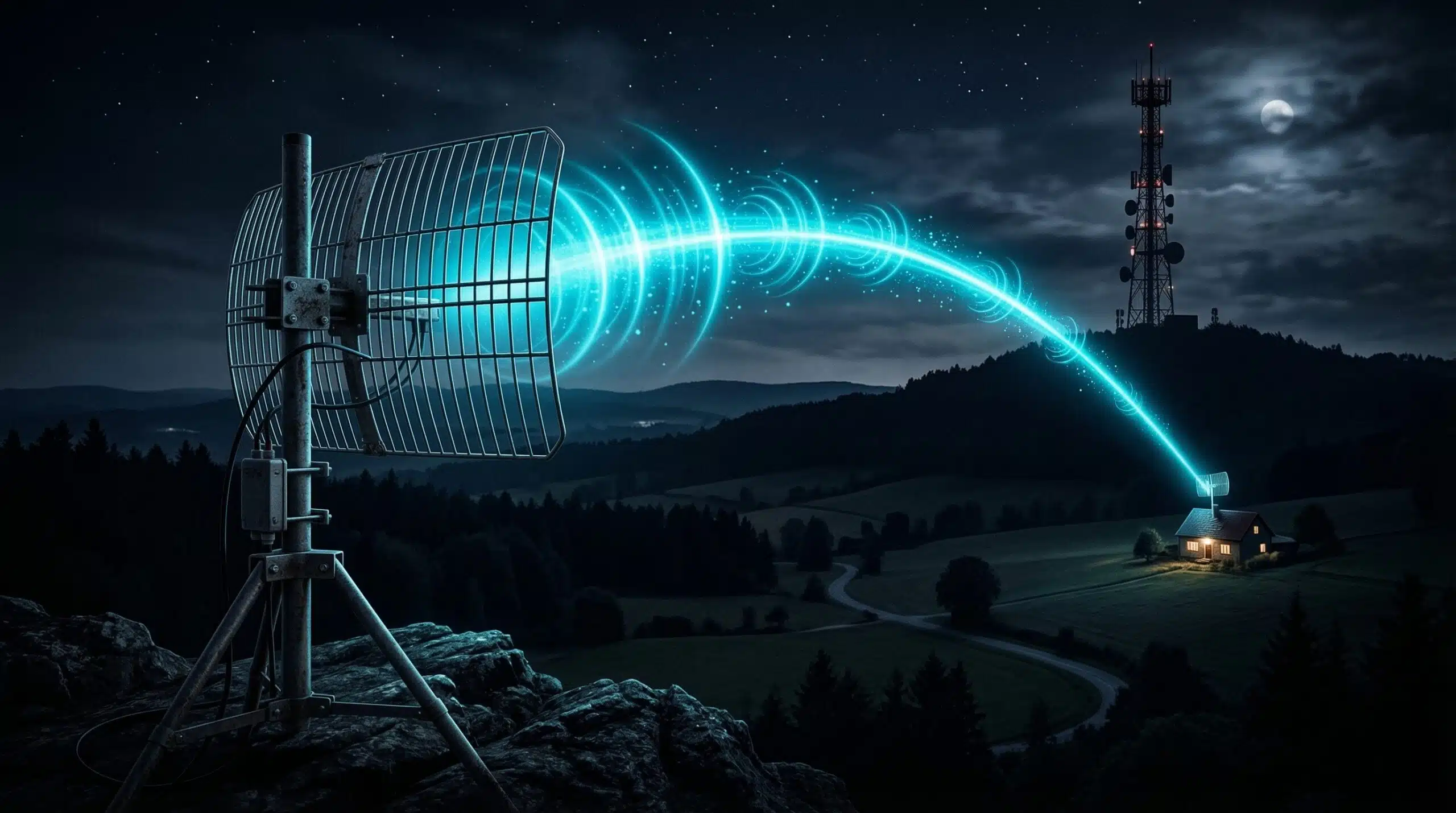
Fixed wireless internet delivers broadband to your home using radio signals transmitted from a nearby tower to a receiver antenna mounted on your roof or exterior wall. Unlike mobile internet (which moves with you), fixed wireless is designed for stationary homes and businesses. It fills the gap for rural and suburban locations where fiber and cable infrastructure doesn’t exist. Providers include local WISPs (Wireless Internet Service Providers), AT&T Fixed Wireless, and increasingly 5G-based fixed wireless from T-Mobile and Verizon. Test your speeds with our free internet speed test.
Fixed Wireless vs 5G Home Internet — What’s the Difference?
5G home internet is technically a form of fixed wireless, just operating on the 5G cellular spectrum managed by major carriers. Traditional fixed wireless uses licensed or unlicensed spectrum (often in the 2.4–60 GHz range) operated by smaller regional ISPs and WISPs. Both deliver internet over-the-air to a receiver on your home. 5G home internet leverages existing cellular infrastructure; traditional fixed wireless uses purpose-built point-to-multipoint tower networks. Performance and pricing vary widely between providers and technologies.
Fixed Wireless Speeds and Performance
| Technology | Typical Download | Typical Upload | Latency |
|---|---|---|---|
| Traditional WISP | 25–100 Mbps | 5–20 Mbps | 15–40ms |
| LTE Fixed Wireless (AT&T) | 25–100 Mbps | 10–25 Mbps | 30–60ms |
| 5G mmWave Fixed Wireless | 300–1000 Mbps | 100–300 Mbps | 10–25ms |
| 5G Mid-band Fixed Wireless | 72–300 Mbps | 15–50 Mbps | 25–50ms |
Does Weather Affect Fixed Wireless Performance?
Yes — heavy rain, snow, and dense fog can cause signal attenuation, reducing speeds and causing brief outages. This is the primary reliability concern with fixed wireless versus wired technologies. Millimeter wave (mmWave) 5G is most susceptible to weather because of its shorter wavelength. Lower frequency bands (sub-6 GHz) handle adverse weather better. Our guide on how weather affects internet speed covers this in detail. Line of sight between your receiver and the tower also matters — obstructions (trees, buildings) reduce signal quality.
Related Guides
- What Is 5G Home Internet?
- What Is Satellite Internet?
- What Is DSL Internet?
- Starlink vs 5G Home Internet
- Download Speed Slower Than Plan
- Does Weather Affect Internet Speed?
Frequently Asked Questions
Is fixed wireless internet good?
For areas without cable or fiber, fixed wireless is an excellent option — particularly modern 5G mid-band fixed wireless which delivers 100–300 Mbps at reasonable latency. Traditional WISP-based fixed wireless varies significantly by provider quality, tower density, and spectrum used. It’s generally superior to DSL and satellite (traditional), comparable to entry-level cable for most everyday activities.
Does fixed wireless need line of sight?
Traditional fixed wireless works best with clear line of sight to the tower. Modern NLOS (Non-Line of Sight) fixed wireless technology using lower frequencies can work through obstructions, but performance degrades with significant barriers. 5G mid-band home internet has better NLOS capability than older fixed wireless technologies due to its lower frequencies and beamforming capabilities.
Can I use fixed wireless for gaming?
Yes for casual gaming, especially with 5G mid-band fixed wireless offering 25–50ms latency. Traditional fixed wireless at 15–40ms latency is also usable. The concern with fixed wireless for gaming is consistency — weather events and tower congestion can cause latency spikes that interrupt competitive gaming sessions. For most gamers, fixed wireless is an acceptable alternative to cable when wired options aren’t available.